← CraftStep DigitalAll resources
BG·EN·MK·EL
Home / Resources / WP1 · Craft

WP1 · Craft

Learning materials for the CRAFT phase in Bulgaria, connected with students’ work and the shoemaking craft.

Learning materials

Visual materials for identifying footwear types, tools, materials and technologies. Each material can be opened at full size once its image is published.

Men’s shoes: main typesImage to be uploaded
Learning panel 01

Men’s shoes: main types

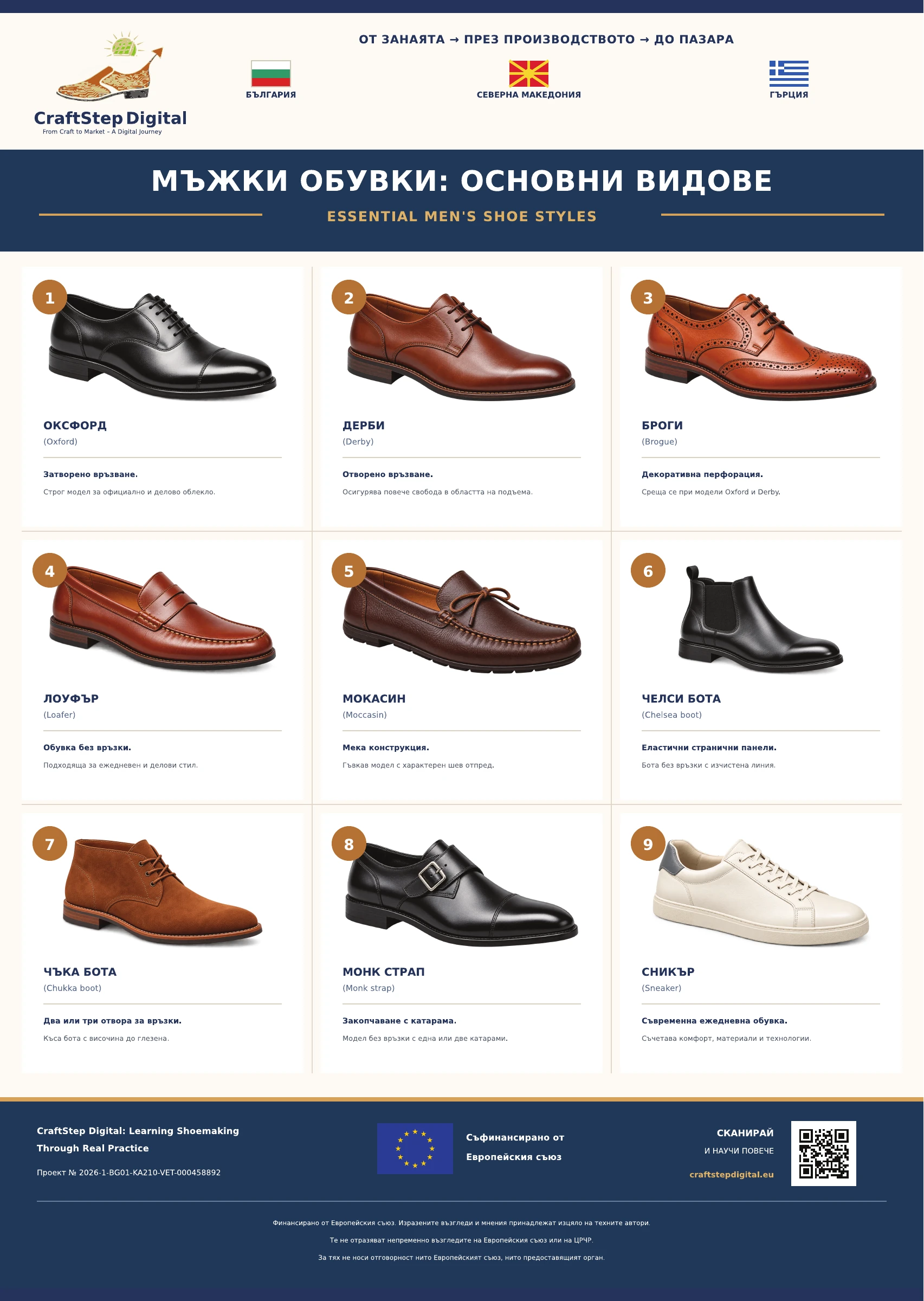
The panel presents nine common types of men’s footwear, including Oxford, Derby, Brogue, Loafer and Chelsea boots. The images show differences in silhouette, lacing and construction. Short descriptions help students identify each type and understand its typical use.
Women’s shoes: main typesImage to be uploaded
Learning panel 02

Women’s shoes: main types

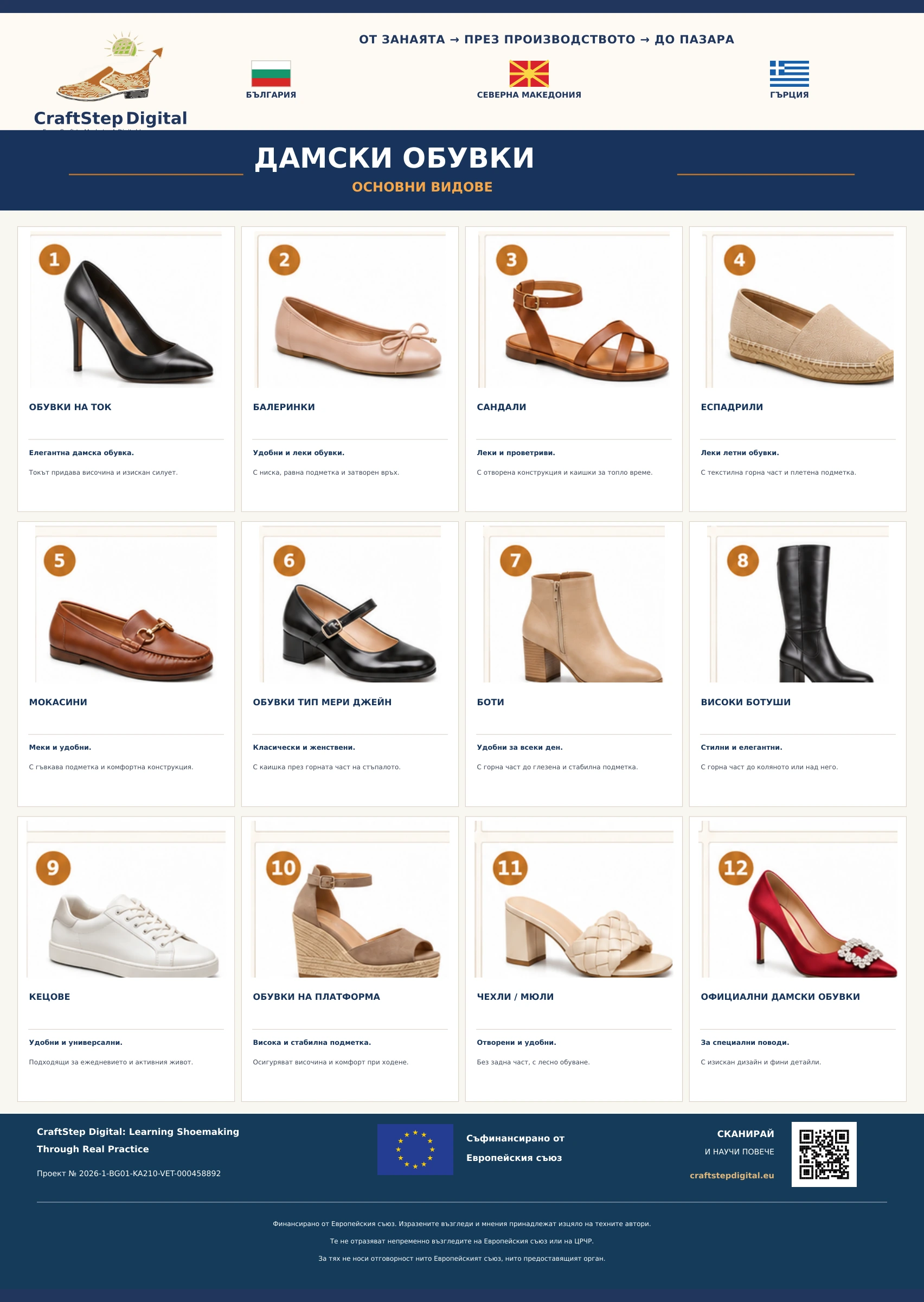
This panel presents twelve types of women’s footwear, including ballet flats, sandals, espadrilles, moccasins, ankle boots and heeled shoes. Students compare upper shapes, heel heights, soles and intended use, and see how construction and design give footwear different functions.

Shoemaker’s toolsImage to be uploaded
Learning panel 03

Shoemaker’s tools

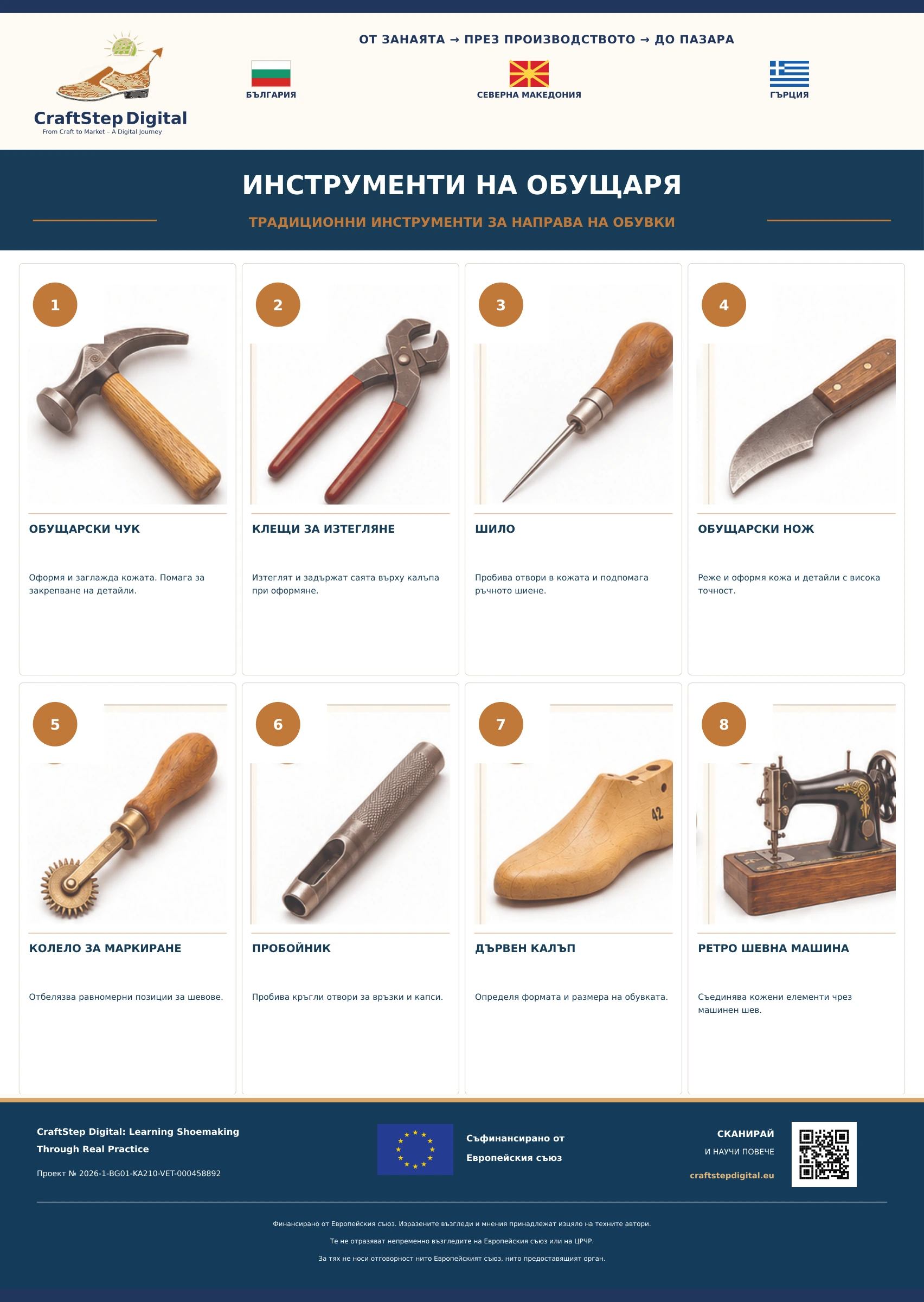
Eight traditional tools show how footwear is made by hand. The panel includes a shoemaker’s hammer, lasting pliers, awl, knife, marking wheel, punch, wooden last and vintage sewing machine, with a short explanation of each tool’s function.

Footwear materialsImage to be uploaded
Learning panel 04

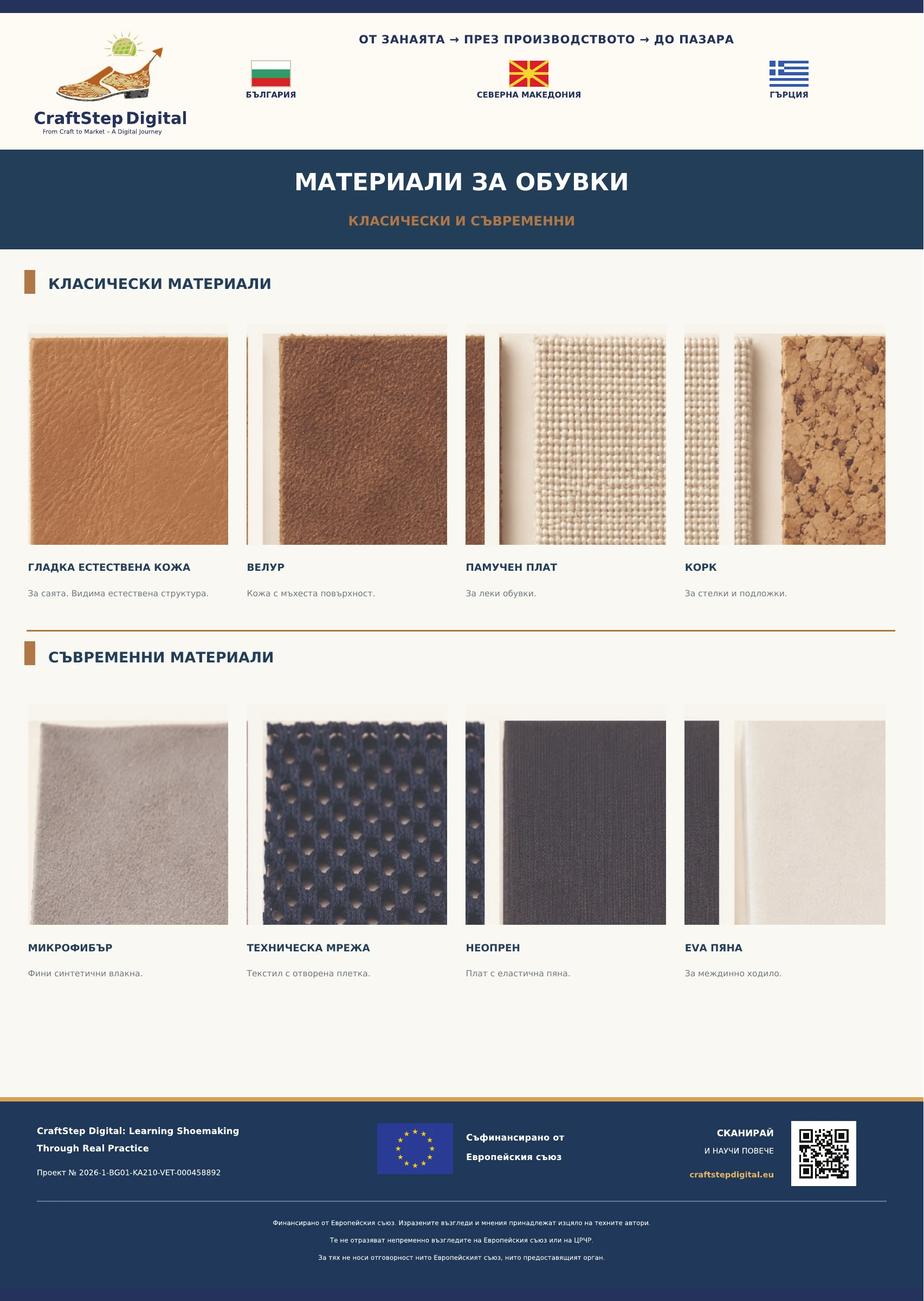
Footwear materials

Footwear is made from a range of natural and modern materials. The panel compares smooth leather, suede, cotton fabric and cork with microfiber, technical mesh, neoprene and EVA foam, showing how material choice affects appearance, comfort and intended use.

Footwear adhesivesImage to be uploaded
Learning panel 05

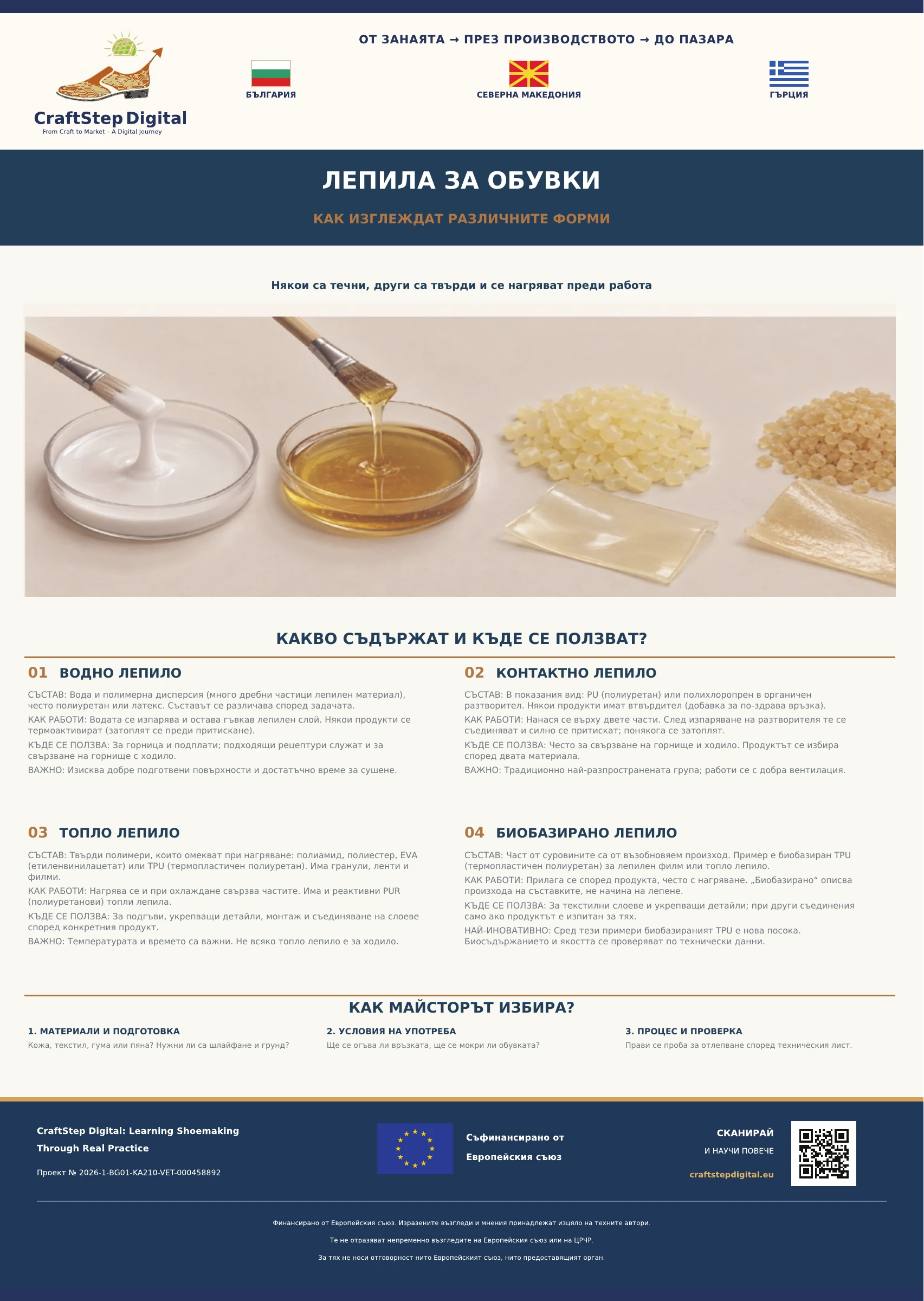
Footwear adhesives

Adhesives join footwear components and are selected according to materials and production methods. The panel presents water-based, contact, hot-melt and bio-based adhesives and explains why surface preparation and correct processing matter for bond strength.

Why is it worth learning about footwear?Image to be uploaded
Learning panel 06

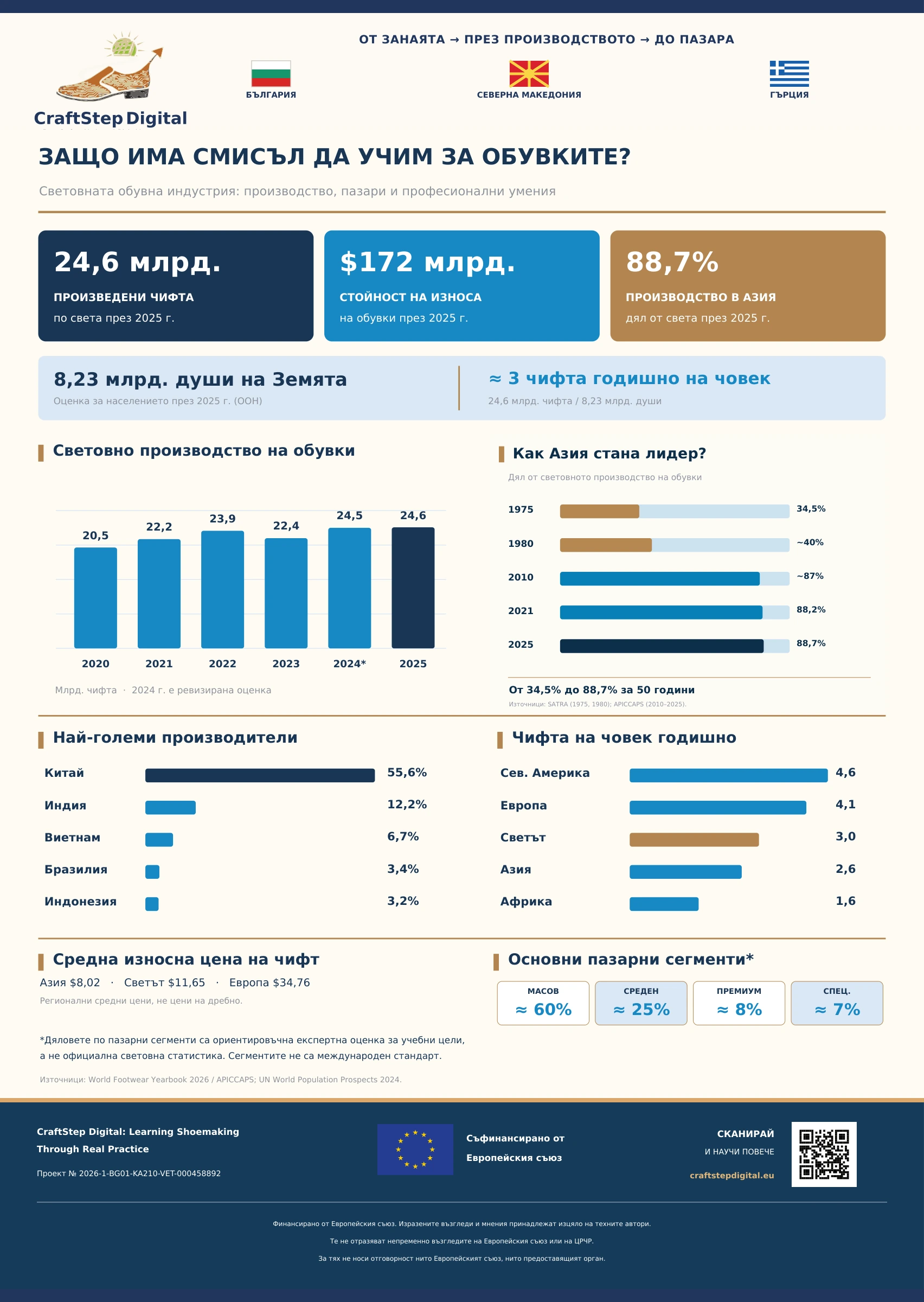
Why is it worth learning about footwear?

Global footwear production reaches 24.6 billion pairs in 2025, and the panel shows how this volume changes over time. Students compare leading producer countries, regional consumption and Asia’s growing share, linking craft, production, markets and vocational skills.

Shoe anatomyImage to be uploaded
Learning panel 07

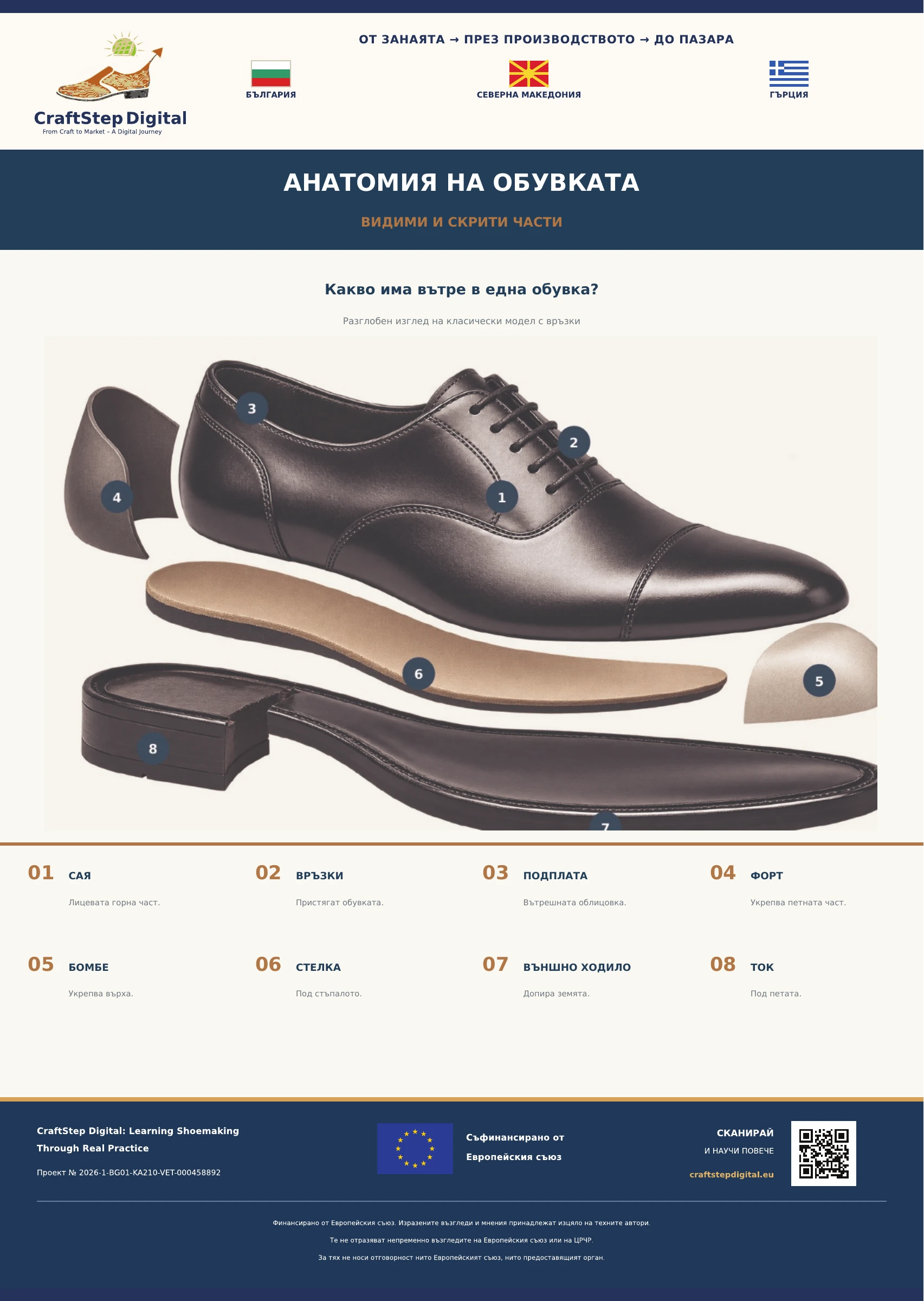
Shoe anatomy

What lies behind the finished appearance of a classic shoe? The exploded model shows visible and internal parts such as the upper, laces, lining, heel counter, toe cap, insole, outsole and heel, helping students understand footwear construction.

What is Erasmus+?Image to be uploaded
Learning panel 08

What is Erasmus+?

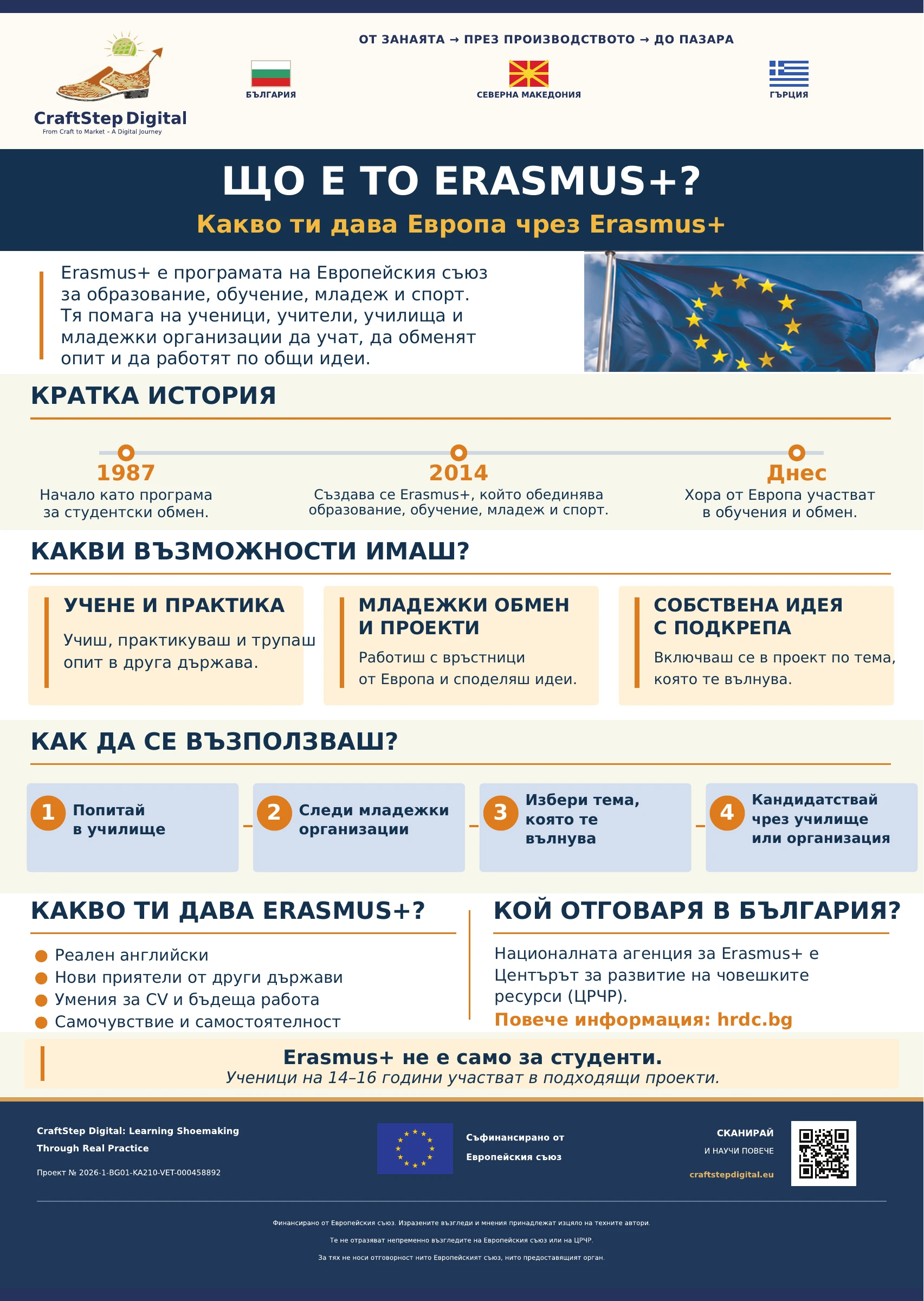
Erasmus+ is the European Union programme for education, training, youth and sport. The panel introduces its history, learning and exchange opportunities, ways for students to participate, and the organisation acting as the National Agency in Bulgaria.

NFC and QR: a link to the shoeImage to be uploaded
Learning panel 09

NFC and QR: a link to the shoe

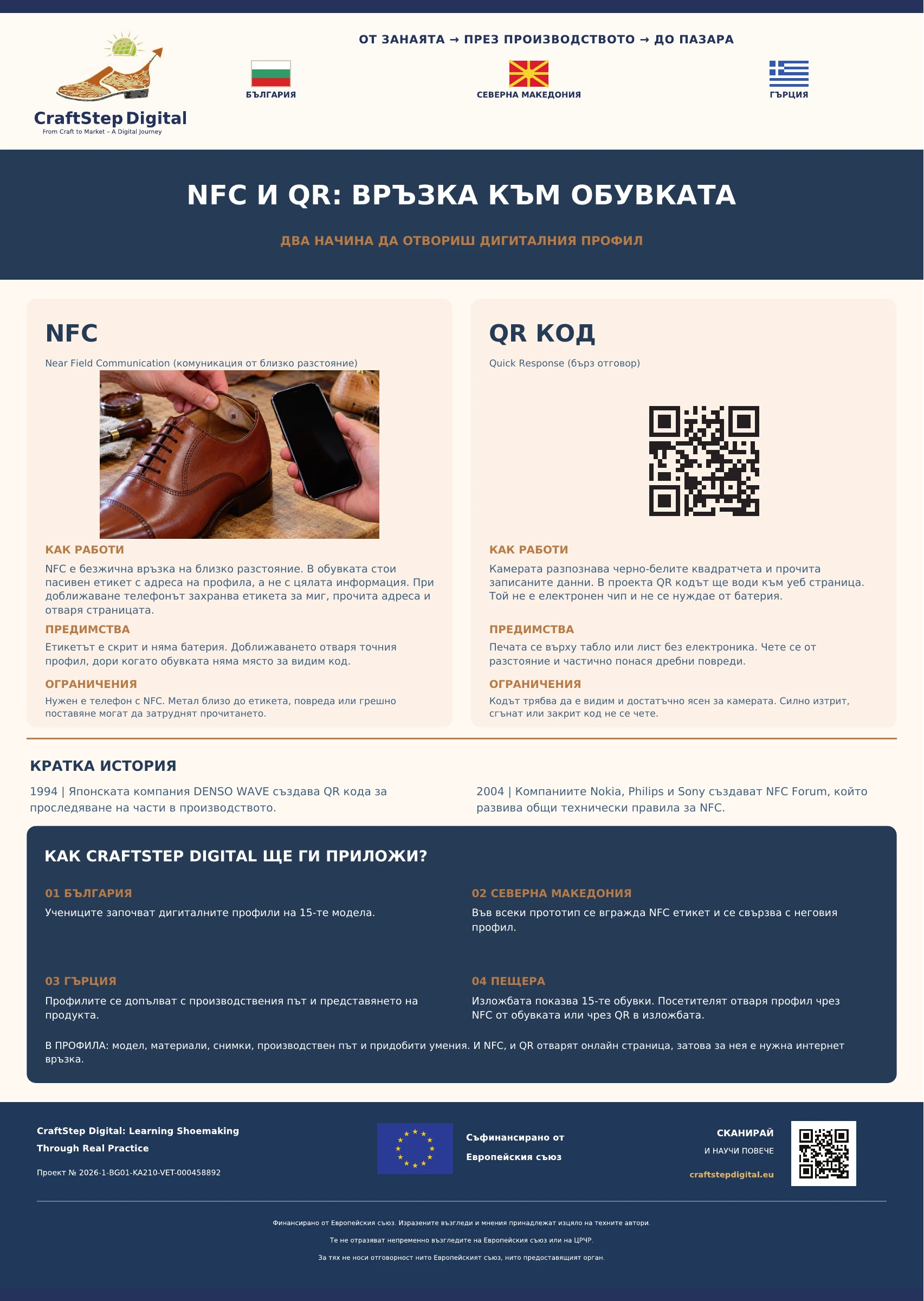
NFC and QR codes connect a physical shoe with digital information. The panel explains how a phone reads an NFC tag at close range and scans a QR code with the camera, comparing the advantages and limits of both approaches in CraftStep Digital.

The CraftStep Digital journeyImage to be uploaded
Learning panel 10

The CraftStep Digital journey

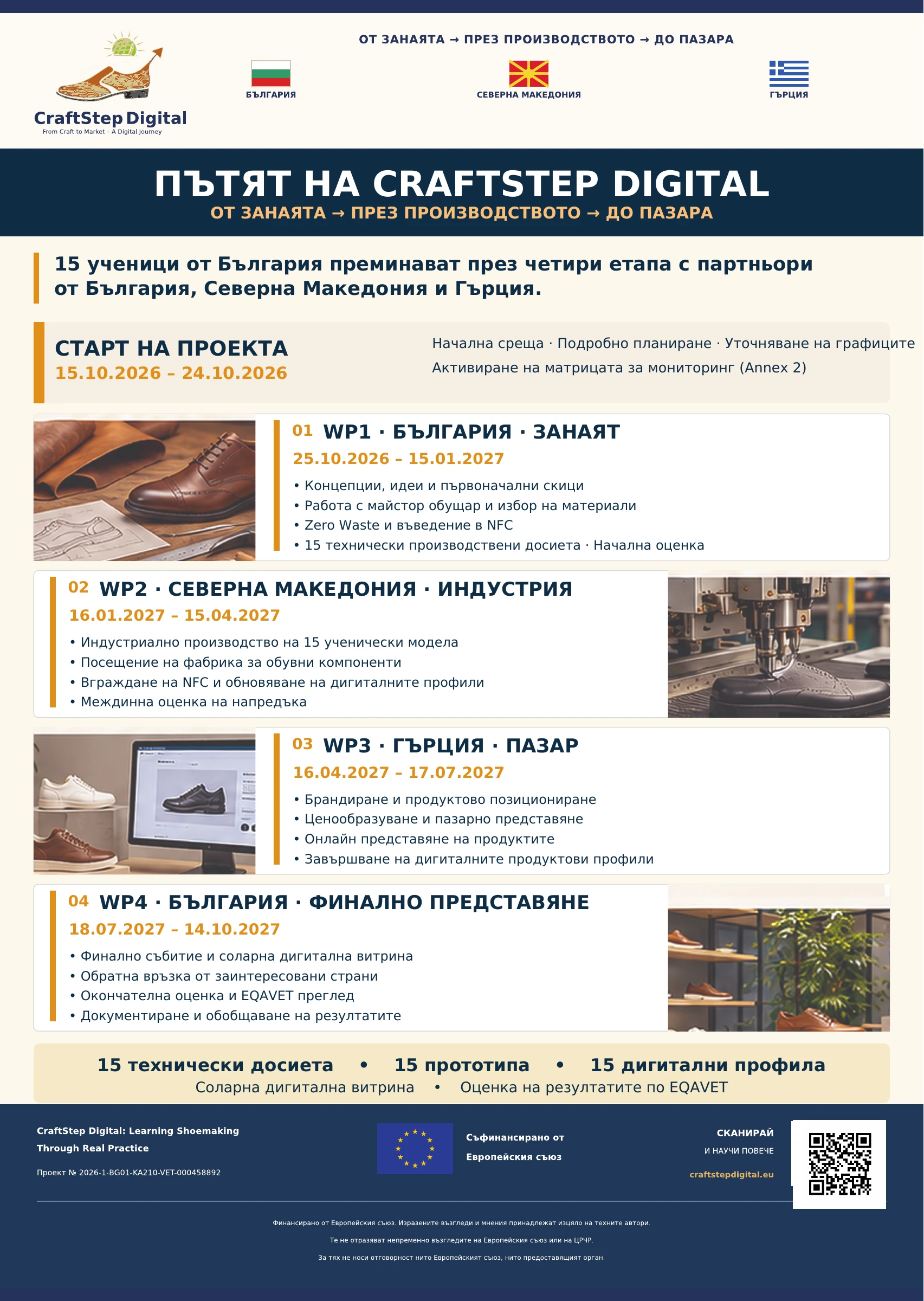
The panel presents the CraftStep Digital pathway from craft through production to market. It connects the work of partners in Bulgaria, North Macedonia and Greece with the development of student footwear models, from concept and technical file to prototype, digital profile and presentation.

Sneaker anatomyImage to be uploaded
Learning panel 11

Sneaker anatomy

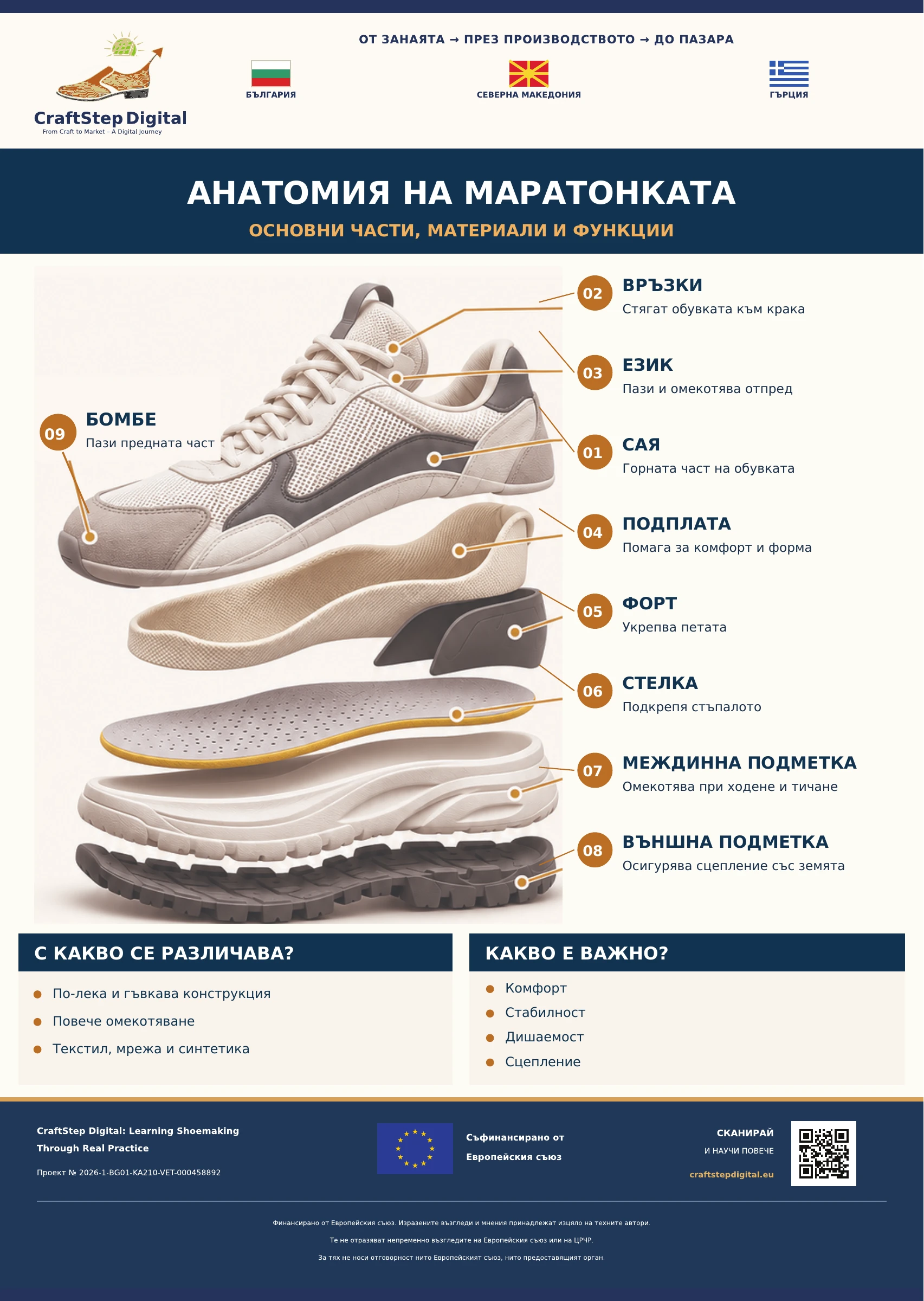
A sneaker combines several layers and materials selected for movement and comfort. The exploded model shows the upper, laces, tongue, toe cap, insole, midsole, outsole and other parts, explaining how construction contributes to cushioning, stability, breathability and grip.